The Hidden Risks of AI-Generated Code: How AI Is Creating a Generation of Engineers Who Don’t Understand Their Systems
2026-06-22 · Technology · 5 min read · @TechScribeWire
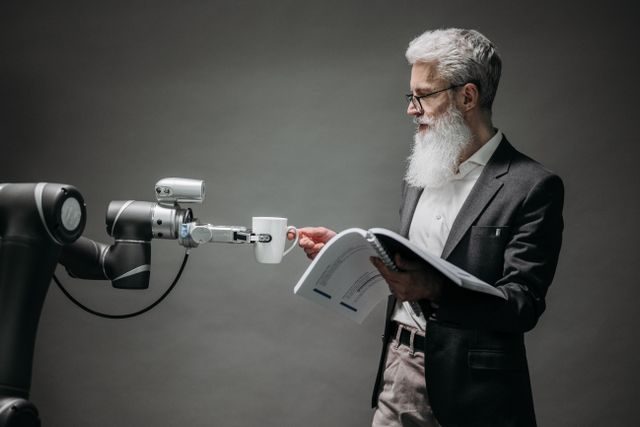
There’s a quiet shift happening inside engineering teams.
Pull requests are getting bigger. Code is getting cleaner. Velocity appears to be increasing.
And yet, something feels off.
Because behind the syntactically perfect functions and beautifully structured Terraform modules, there’s a growing truth many senior engineers are afraid to say out loud:
AI isn’t making engineers smarter.
It’s making mediocre engineers look competent.
And that illusion is becoming dangerous.
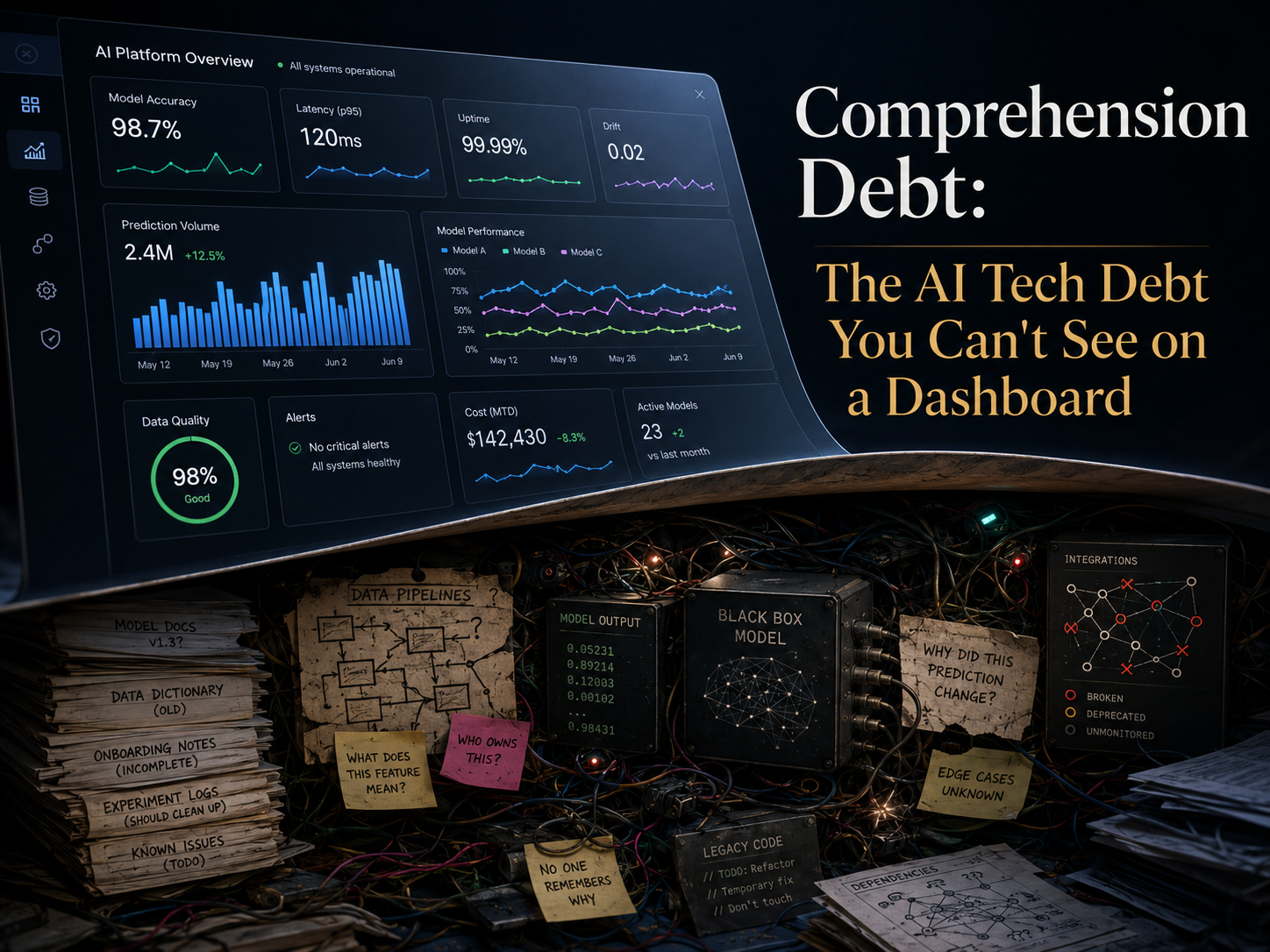
AI doesn’t remove incompetence. It masks it.
This isn’t an anti-AI rant. I work in DevOps and platform engineering. I see the power of AI-assisted development every day.
But if we don’t talk about the downside — honestly — we risk hollowing out the next generation of engineers while thinking we’re accelerating progress.
Let’s break this down.
- The Rise of the AI-Generated Engineer AI coding tools are everywhere.
GitHub Copilot writes boilerplate. ChatGPT generates Terraform modules. LLMs draft CI/CD pipelines in seconds. Kubernetes manifests are assembled with a single prompt.
Pull requests now arrive faster than ever.
But here’s the uncomfortable question:
Does the engineer who submitted the PR actually understand the system they just modified?
Increasingly, the answer is: partially.
Or worse: not really.
We’re seeing:
Copilot-driven pull requests with minimal edits Infrastructure code generated via prompt engineering Entire scripts added because “it worked in testing” Reviews that pass because “it compiles” and “tests are green” The code looks clean. The syntax is correct. The formatting is beautiful.
But understanding? That’s optional.
We are entering an era where:
The engineer becomes a curator of AI output rather than an author of system behavior.
That distinction matters more than most organizations realize.
- The Illusion of Competence AI-generated code often looks better than human-written code.
It’s well-structured. It follows naming conventions. It avoids obvious syntax errors.
But clean code is not the same thing as correct architecture.
Let’s look at real examples happening across DevOps teams:
ChatGPT-Generated Terraform That “Looks Perfect” You prompt:
“Create a production-ready AWS infrastructure setup with autoscaling and secure networking.”
It produces:
VPC Subnets Security groups Load balancer Autoscaling group It compiles. It deploys.
But:
Are the CIDR blocks future-proof? Are the security groups overly permissive? Is the scaling policy aligned with business traffic patterns? Are cost implications understood? AI optimizes for plausibility — not context.
And context is where real engineering lives.
DevOps Pipelines Glued Together Without Failure Thinking AI can assemble a working CI/CD pipeline in seconds.
But does it:
Model rollback strategy? Handle partial deploy failures? Account for downstream service coupling? Understand blast radius? No.
It predicts the most statistically likely answer.
Which means it reproduces the average solution — not necessarily the resilient one.
We are rewarding surface correctness while eroding deep systems thinking.
And because the output looks polished, the illusion becomes stronger.
- Production Is Where the Truth Lives Here’s something AI doesn’t experience:
3am incidents.
AI doesn’t:
Get paged when the cluster dies Sit on incident bridges Face the CFO asking why revenue dropped Feel the pressure of degraded production Production is where theory collides with reality.
It’s where:
Edge cases surface Traffic spikes break assumptions Race conditions reveal themselves Misconfigured IAM policies become catastrophic And here’s the key:
AI can generate code.
But it cannot own consequences.
Real engineering maturity comes from:
Watching something fail Debugging the failure Understanding root cause Redesigning to prevent recurrence That feedback loop builds intuition.
If AI increasingly absorbs the “hard parts” of implementation, junior engineers may skip the struggle that creates that intuition.
And that’s a structural risk.
- The Real Risk: Junior Engineers Never Become Seniors Press enter or click to view image in full size
Photo by Annie Spratt on Unsplash This is the part nobody wants to discuss.
Struggle builds expertise.
Writing flawed code — and fixing it — builds depth. Debugging complex race conditions builds mental models. Designing bad architectures — and refactoring them — builds judgment.
But if AI generates most of the implementation, what happens?
Junior engineers:
Prompt instead of reason Patch instead of design Accept output instead of interrogate it They become fast.
But do they become deep?
We may be unintentionally creating:
Engineers who can assemble systems But cannot design them Engineers who can deploy But cannot debug Engineers who can ship But cannot diagnose systemic risk If that trajectory continues, the industry faces a paradox:
More code shipped. Less understanding embedded.
The next generation of “senior engineers” may have fewer battle scars — and fewer mental models.
And that’s not a criticism of them.
It’s a systems problem.
- The Balanced Take: AI Is Powerful — But Only With Judgment Let’s be clear:
AI is not the enemy.
Used correctly, it’s leverage.
It accelerates:
Boilerplate Documentation Test scaffolding Pattern recall Refactoring For experienced engineers, AI is an amplifier.
For inexperienced engineers, it can be a mask.
The real dividing line isn’t “uses AI” vs “doesn’t use AI.”
It’s this:
Do you understand what the AI just produced — and why?
The future skill isn’t memorizing syntax.
It’s architectural thinking.
It’s:
Systems modeling Failure anticipation Trade-off analysis Risk quantification Business alignment AI handles the predictable.
Humans must own the contextual.
Organizations that mistake output volume for engineering maturity will eventually pay for it — in outages, security breaches, or architectural debt.
So What Should Engineering Leaders Do? If you’re leading DevOps, platform engineering, or cloud infrastructure teams, the goal isn’t to restrict AI.
It’s to:
Enforce architectural review discipline Require explanation, not just code submission Assess design reasoning in code reviews Prioritize system understanding over velocity metrics Encourage engineers to defend decisions Ask in PR reviews:
Why this approach? What are the failure modes? What are the cost implications? What happens at 10x scale? If the answer is, “AI suggested it,” you have a training gap.
And training gaps compound over time.
The Hard Truth AI isn’t making engineers fake.
But it is making it easier to appear competent without depth.
And in engineering, depth matters.
Because systems fail in ways that look nothing like tutorial examples.
We don’t need fewer AI tools.
We need stronger engineering standards.
We need engineers who use AI as leverage — not as a substitute for thinking.
Otherwise, we risk building beautifully structured systems on foundations nobody fully understands.
Final Thought The scariest future isn’t AI replacing engineers.
It’s organizations replacing engineering judgment with statistical prediction.
AI doesn’t remove incompetence.
It masks it.
And in production, masks eventually slip.
If your organization is integrating AI into DevOps and platform engineering, you don’t need more generated code — you need structural clarity.
You need:
Architecture that survives scale Pipelines built for failure, not demos Systems designed with business risk in mind That’s what we solve at Signal Forge Systems.
Because velocity without clarity is just technical debt moving faster.